
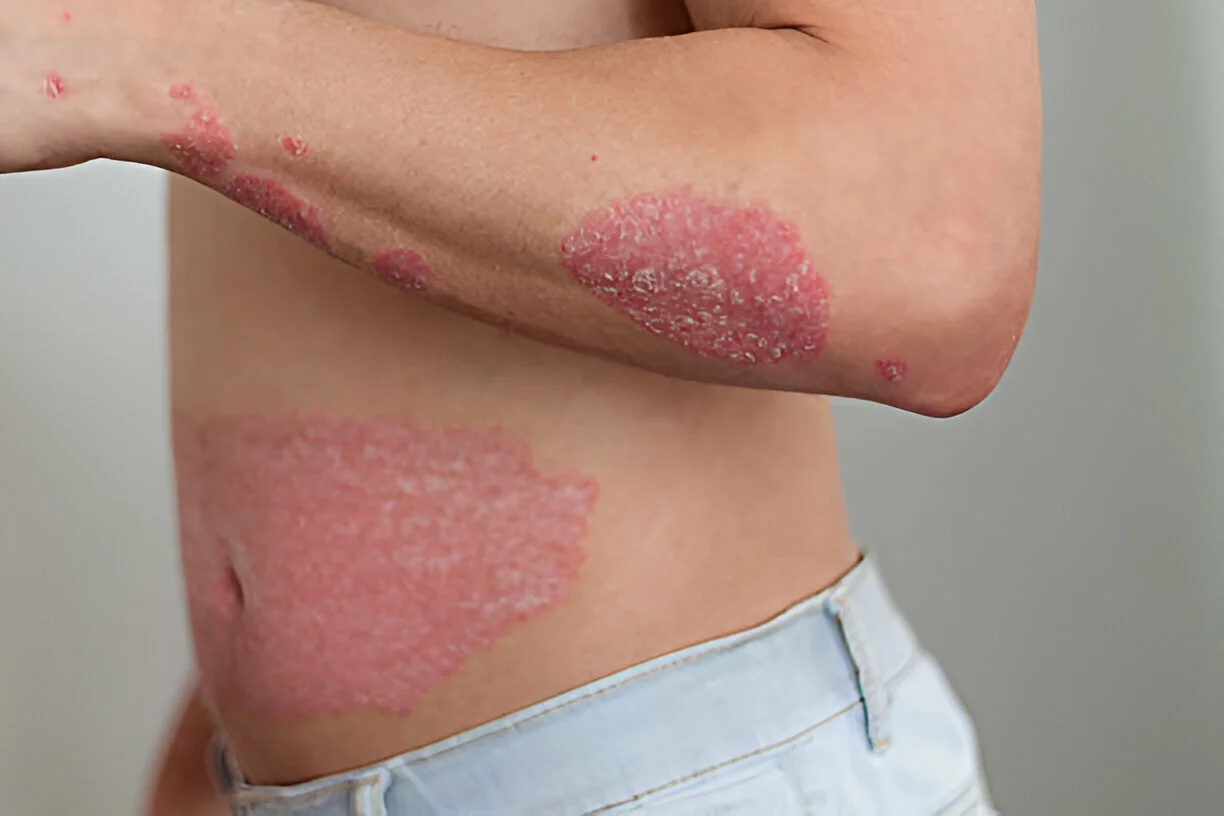
Psoriasis is a chronic autoimmune skin condition that causes skin cells to multiply much faster than normal, resulting in thick, raised, scaly patches on the skin. These patches may appear red or inflamed with whitish-silver scales and can cause itching, burning, soreness, dryness, or cracking. Psoriasis commonly affects the scalp, elbows, knees, lower back, and nails, although it can develop anywhere on the body.
At New Touch Skin & Hair Care Clinic, we provide comprehensive Psoriasis Treatment focused on controlling inflammation, reducing scaling and itching, managing flare-ups, and improving overall skin health. Our experienced dermatologists carefully evaluate the type and severity of psoriasis, affected areas, medical history, and possible triggers before creating a personalized treatment plan. Although psoriasis is a long-term condition without a definitive cure, proper dermatological treatment and ongoing care can effectively manage symptoms and improve quality of life.
Our dermatologists have experience diagnosing and managing different forms of psoriasis, from mild localized patches to more extensive disease.
We carefully assess your symptoms, skin involvement, nail changes, possible joint symptoms, and potential triggers before recommending treatment.
Every treatment plan is tailored to the severity of your condition and may combine topical therapies, phototherapy, or systemic medications when medically appropriate.
We help identify factors that may worsen psoriasis, including stress, infections, skin injuries, weather changes, smoking, alcohol, and certain medications.
As psoriasis can be a long-term condition, regular monitoring helps manage flare-ups, adjust treatment when necessary, and improve your overall quality of life.